Last Updated on September 17, 2026 by Jane Nriapia
When reviewing aesthetic clinic websites, I regularly see products and devices described as “FDA approved”. It sounds reassuring, but what does it actually tell a patient booking treatment in the UK?
FDA approval concerns a product’s status in the United States. It does not, by itself, establish that the product meets UK requirements.
I watched a video last night on Youtube about the history of make-up and it prompted me to explore this further. Behind those familiar initials is a history of dangerous beauty products, changing legislation and questions that still matter when clinics write their websites.
What is the FDA?
FDA stands for the Food and Drug Administration, a US agency responsible for regulating products including medicines, medical devices, food and cosmetics.
However, regulation and approval are different. The FDA does not approve everything within its remit, and different product categories follow different processes.
That distinction matters for beauty businesses and cosmetic clinics. A moisturiser sold by a beauty salon and an injectable product used by a medical practitioner do not necessarily follow the same regulatory route.
How did cosmetics become regulated?
In the 1930s, an eyelash dye called Lash-Lure offered women darker lashes. It also caused serious eye injuries, including a confirmed case of permanent blindness.
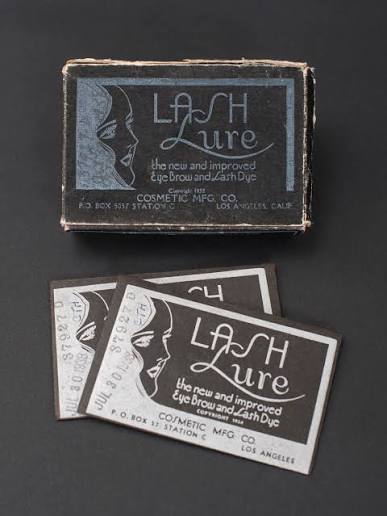
The FDA included it in an exhibition of dangerous and misleading products that exposed the limitations of existing legislation. The display became known as the “American Chamber of Horrors”.
Campaigners pushed for stronger protections, but legislation stalled for years. Then, in 1937, a medicine called Elixir Sulfanilamide, made with a toxic solvent, killed more than 100 people, including children.
The disaster helped propel the Federal Food, Drug, and Cosmetic Act into law in 1938. As the FDA’s history explains, it brought cosmetics and medical devices within the agency’s regulatory scope and required evidence of safety before new drugs could be marketed.
The story is a reminder of why beauty marketing needs scrutiny. A convincing advertisement could sell a product long before customers understood its risks.
What does FDA approval mean?
FDA approval means the agency has assessed a product under the applicable approval process for its intended use. For medicines, this includes determining that the benefits outweigh the known risks.
It is not a promise that treatment is risk-free, nor does the FDA approve clinics or practitioners.
For example, the FDA approves particular dermal fillers for particular uses. A cosmetic clinic should not present that approval as covering every area of the face or every treatment offered with that filler. Patients still need information about suitability, limitations and potential complications.
FDA approved, cleared and registered: what is the difference?
These terms describe different things:
- FDA approved: A product has passed the relevant FDA approval process.
- FDA cleared: Commonly refers to a device cleared through the 510(k) pathway after demonstrating substantial equivalence to a legally marketed predicate device.
- FDA registered: Registration records an establishment with the FDA. Registration or product listing does not establish approval.
The FDA explains these distinctions. If a supplier describes a device as “FDA cleared”, changing that to “FDA approved” on your treatment page changes the claim.
Does the FDA approve cosmetics?
Ordinary cosmetics, such as make-up and moisturisers, generally do not require FDA approval before sale. Certain colour additives are an exception.
Manufacturers still have legal responsibilities, including ensuring product safety. A product’s intended use and claims can also affect whether it is regulated as a cosmetic, a drug, or both.
For skincare retailers and beauty salon owners, this is a reason to check product descriptions carefully, particularly when adapting marketing material written for an American audience.
What is the UK equivalent of the FDA?
There is no single UK organisation covering exactly the same responsibilities.
The Medicines and Healthcare products Regulatory Agency (MHRA) regulates medicines and medical devices in the UK. It is the closest comparison for those parts of the FDA’s work.
Cosmetics have a separate framework. The government’s cosmetics guidance sets out requirements for Great Britain, including a Responsible Person, a qualified safety assessment and notification to the Office for Product Safety and Standards (OPSS) before a product is made available. Notification is not equivalent to FDA-style product approval.
For medical devices, the MHRA’s guidance covers conformity assessment, marking and registration. UKCA and accepted CE marking routes are relevant in Great Britain. Northern Ireland follows different rules, so “UK approved” can be an oversimplification.
What if a product is not FDA approved?
The phrase alone does not establish that a product is unsafe.
An ordinary cosmetic might not require approval. A device might follow a clearance pathway. A product supplied in the UK must satisfy the requirements applicable here, regardless of whether it is marketed in America.
Equally, lack of approval should not simply be dismissed where approval is required. The useful questions are: what type of product is it, what is its intended use, and what regulatory requirements apply?
What should aesthetic clinics say on their websites?
My advice is to explain the claim rather than rely on the initials. Before publishing, check:
- The exact product or device model being discussed.
- Whether its status is approved, cleared or registered.
- Which use the status covers.
- The evidence supporting its availability in the UK.
- Whether the wording could imply guaranteed safety or approval of the clinic itself.
When working on SEO for medical aesthetic clinics, I look at whether treatment pages answer the questions prospective patients would ask. Regulatory terminology needs that same attention: what does the claim mean for someone considering this treatment?
Ask your supplier for the supporting documentation, then make sure your website copy reflects what it actually says. Explain the relevant status alongside the treatment’s purpose, suitability and limitations.
That gives patients useful information when deciding whether to book a consultation.